How to Choose a Reliable Vinyl Flooring Supplier in China
- 1
Quick Answer
To choose a reliable vinyl flooring supplier in China, do not judge the company only by price or factory ownership. A dependable supplier should provide suitable products, stable quality, clear specifications, valid certificates, professional inspections, safe packaging, export experience, and after-sales service.
The right supplier should understand your market, application, budget, installation method, and compliance requirements, then recommend the correct flooring solution instead of offering the lowest price.
Why Supplier Selection Matters
Vinyl flooring includes SPC, LVT, WPC, homogeneous vinyl flooring, heterogeneous vinyl sheet, ESD flooring, and PVC sports flooring. Each category has different requirements for raw materials, production technology, testing, installation, and quality control.
Choosing an unsuitable supplier may cause sample-to-bulk color differences, weak click systems, poor dimensional stability, insufficient wear resistance, roll shrinkage, curling, joint opening, packaging damage, delivery delays, or invalid certificates. For buyers, supplier selection directly affects installation quality and business risk.
1. Identify the Correct Flooring Type
Before requesting a quotation, define the application and required product type.
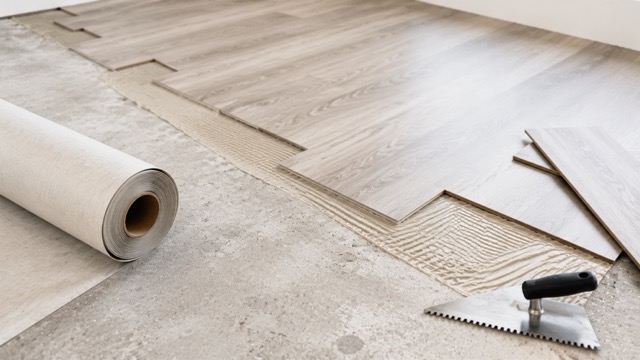
- SPC flooring: Used in homes, apartments, offices, and retail spaces. Check thickness, wear layer, core density, click system, IXPE backing, and dimensional stability.
- LVT flooring: Suitable for residential and light commercial projects. Check thickness, wear layer, surface texture, installation method, and color consistency.
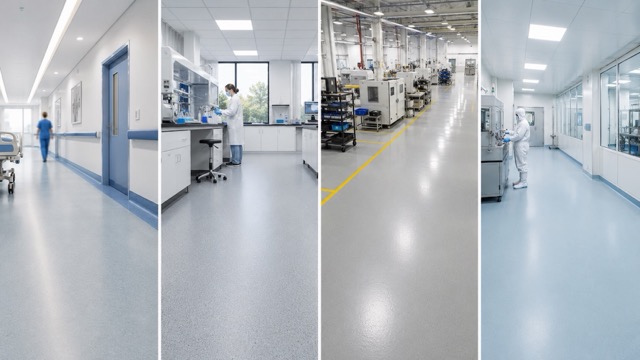
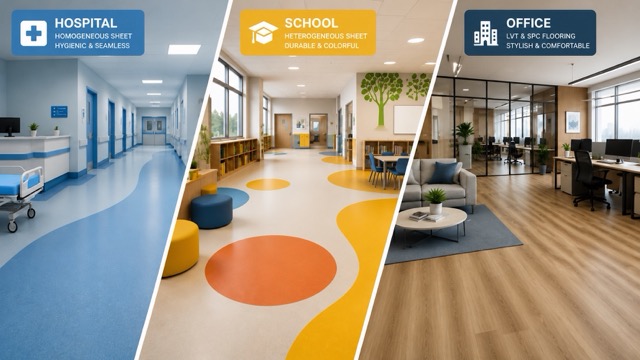
- Homogeneous vinyl flooring: Often selected for hospitals, schools, laboratories, and public buildings because of its through-body structure, durability, and maintainability.
- Heterogeneous vinyl sheet: Suitable for commercial, healthcare, and education projects. Check the wear layer, backing structure, roll size, slip resistance, and surface treatment.
- ESD vinyl flooring: Designed for electronics factories, cleanrooms, laboratories, and data centers. Conductive or static-dissipative performance should be supported by test reports.
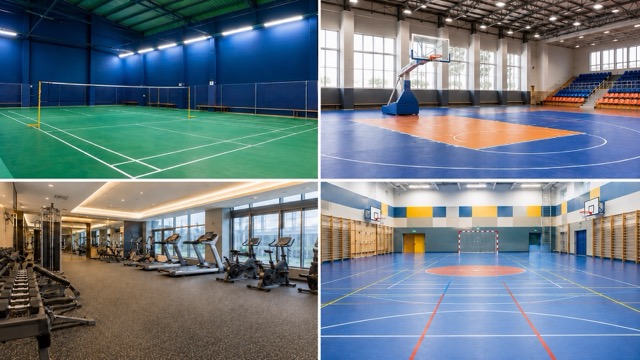
- PVC sports flooring: Used for badminton, basketball, multipurpose halls, and school gyms. Important properties include shock absorption, ball rebound, slip resistance, and sports safety.
A professional supplier should explain which product suits the actual environment rather than recommending the same floor for every inquiry.
2. Evaluate Product Knowledge
Ask what products the supplier specializes in, which specifications are common in your market, what quality risks apply, and whether it has completed similar orders.
A knowledgeable supplier should explain the differences between residential, commercial, healthcare, industrial, ESD, and sports flooring. It should provide data sheets, samples, test reports, and recommendations based on site conditions.
Repeatedly saying “we can make it” without explaining the material, structure, performance, or limitations is a warning sign.
3. Look Beyond the Factory Label
Many buyers ask whether a company is a factory or a trading company. This matters, but it should not be the only decision factor.
Different vinyl flooring products require different equipment and production systems. A supplier with strong supply-chain management may offer a wider product range, better specification matching, and more efficient export support than a single factory specializing in one category.
The important questions are whether the supplier understands quality risks, uses stable production resources, controls sample-to-bulk consistency, follows a clear inspection process, and can support repeat orders.
4. Verify Certifications and Test Reports
Common documents include ISO 9001, CE and Declaration of Performance, REACH, FloorScore, fire testing, slip-resistance testing, VOC testing, wear-resistance testing, antibacterial testing, and ESD performance reports.
Confirm that each certificate is valid, the tested product matches the item you plan to buy, the standard is accepted in your market, and the report comes from a recognized laboratory. Project buyers should also verify whether the documents can support import clearance, tender submissions, or local building requirements.
5. Compare Specifications Before Prices
Two floors can look similar in photographs but have very different costs and performance.
For SPC flooring, compare total thickness, wear layer, core density, click system, backing, surface texture, UV coating, raw-material formula, and packaging. For vinyl sheet flooring, compare total thickness, wear layer, product weight, backing type, roll width, fire rating, slip resistance, and commercial classification.
A professional quotation should state product size, structure, thickness, wear layer, weight, packaging, container loading quantity, MOQ, lead time, payment terms, and trade terms such as FOB, CIF, EXW, or DDP.
The lowest price is not a saving if the flooring later shrinks, curls, warps, opens at the joints, or fails during installation.
6. Approve Samples and Inspect Bulk Production
Samples allow buyers to check color, texture, thickness, flexibility, surface finish, click strength, backing quality, weight, and appearance. Sample approval should also include written specifications.
Confirm that bulk production will follow the approved sample, acceptable color tolerance is defined, and repeat orders can maintain the same structure and quality. For large or customized projects, request a pre-production sample and inspection photos or videos before shipment.
Quality control should cover thickness, wear layer, color matching, surface defects, size tolerance, click performance, dimensional stability, shrinkage, curling, carton strength, pallet condition, and loading quantity. ESD, commercial, and sports flooring may require additional performance tests.
7. Check Export, Packaging, and Service Capability
An experienced supplier should understand export documents, local specifications, container weight limits, packaging requirements, shipping methods, and installation practices.
For SPC and LVT, strong cartons and pallets help prevent corner damage and box collapse. For vinyl rolls, check roll width, roll length, paper-tube strength, outer wrapping, and loading method.
Also evaluate communication. Reliable suppliers provide clear quotations, realistic lead times, production updates, inspection support, loading photos, and a process for handling quality claims.
Warning Signs
Be cautious when a supplier focuses only on low prices, cannot provide clear specifications, avoids certification questions, refuses sample confirmation, promises unrealistic lead times, changes prices without explanation, or cannot explain product risks and inspection procedures.
Final Recommendation
The most reliable Chinese vinyl flooring supplier is not necessarily the cheapest company or the company claiming to manufacture every product itself. It is the supplier that can match the correct flooring to your market, maintain stable quality, provide accurate documents, control production and packaging, and support your business after shipment.
For long-term cooperation, product knowledge, transparency, quality assurance, and consistent service are more valuable than a small difference in unit price.